Online EMR Systems: Benefits for Modern Healthcare Providers.
Today's healthcare practitioners, in addition to treating patients, must also cope with a growing volume of administrative tasks. From managing patient medical records and coordinating appointments to organizing clinical notes, storing test reports, writing prescriptions, processing billing information, and developing formal care plans, every task requires a reliable organizational method to avoid errors. If traditional paper medical records are still in use, the entire team will spend a massive amount of extra time searching for documents, and cross-departmental coordination of these tasks becomes extremely cumbersome. Online EMR systems store all medical information centrally in a secure, on-demand digital space, eliminating these hassles. During consultations, doctors can pull up a patient's full medical record in seconds to review key details. Nurses can easily access care records and other core medical information to support patient care. Clinic front desk staff and clinical personnel can add new content directly to a patient's digital file, eliminating the need for paper-based application processes.
EMR is an abbreviation for Electronic Medical Record
Online EMR systems organize all of a patient's medical information into a unified digital space, accessible only to vetted staff. A patient's full medical history, clinical notes, current medications, test results, formal diagnoses, treatment information, and formal care plans are all stored in one centralized file. Only staff with valid access permissions can view or modify this information, ensuring that only authorized personnel can access this sensitive data. Family physicians can review all of a patient's prior clinical notes before a consultation begins. Nurses can pull up care records and other relevant details to deliver safe, evidence-based care to patients.
Any new updates, whether newly released test reports or adjusted care plans, can be added directly to the same digital file, so all teams always work from the most current information. This model eliminates reliance on storage space for stacks of paper documents and reduces the workload of manually organizing medical records. Compared to outdated paper systems, online EMR systems help healthcare practitioners organize patient information far more efficiently, while including robust security controls to prevent unauthorized access to sensitive medical information.
EMR means Electronic Medical Record.
Online EMR stores patient data in digital form.
Patient history, notes, medicines, and lab results can be managed.
New information can be added and updated in the digital record.
EMR reduces paper files and manual record-keeping.
Security controls help keep patient data safe and organized.
Eight Core Advantages
Online EMR systems optimize healthcare staff's daily work in multiple ways, and these advantages are what make digital medical records increasingly important in modern medical practice.
Faster Access to Medical Records
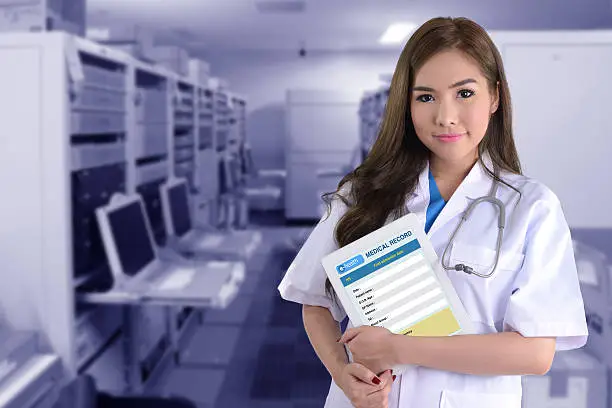
One core benefit of online EMR systems is the ability to quickly retrieve a patient's medical information. Doctors no longer need to sift through dust-covered paper folders or carry stacks of medical records to review a patient's medical history; the required record can be pulled up with a few clicks in the digital system. Test reports, medication histories, clinical notes, and care plans are all compiled into one well-organized file, eliminating the need to piece together information from disparate materials. Before administering injections, changing dressings, or performing any care task, nurses can also quickly verify all key information, avoiding mistakes related to misremembered medical histories or medication contraindications.
More Comprehensive Patient Information Management
Online EMR systems organize all patient information into a centralized digital file. All staff can manage all types of medical information within the same patient profile, eliminating the need to switch between different systems and piles of documents to find materials. A patient's medical history, medication status, test results, clinical notes, and care plans are accessible at any time, so no material goes missing. New content can also be added directly to existing files, such as newly released test reports or just-completed clinical notes; inputting and saving this information is simple, making it easy to keep a patient's medical record fully updated and organized, avoiding the lost pages and disorganization that plague paper files.
Key Advantages of Online EMR Systems
Online EMR systems deliver a wide range of benefits to healthcare staff, covering everything from medical record management to streamlining daily workflows. These digital tools organize routine work in a more orderly, efficient manner, and also allow staff to quickly retrieve and update patient information, freeing them from the constraints of paper medical records.
More Convenient Medical Record Access
Online EMR systems allow doctors and nurses to quickly access patient information. Required clinical notes, test reports, and medical histories are all available in the digital file, eliminating the time spent searching for paper files stored in warehouses and eliminating the risk of paper files being borrowed or lost, naturally boosting the efficiency of daily patient care.
Clearer Data Organization
All patient information is stored in one centralized digital file, and staff can view clinical notes, medication status, various reports, and care plans in the same profile. All information is in one place, eliminating the need to search across multiple locations, while also making it easy to add new content, keep medical records updated at all times, and maintain a clear structure to avoid chaos.
Fewer Administrative Tasks
Digital medical records reduce the workload of daily paperwork and manual file organization. Staff can input and manage patient information directly in the system, eliminating the need to hand-write stacks of forms, set aside dedicated physical storage space for piles of paper medical records, or repeatedly input the same information. A single patient's information only needs to be entered once, avoiding the hassle of inputting a medical history one day and inputting the same information again for billing the next. The time saved can be allocated to patient care and other critical tasks, rather than being buried under piles of paper.
Smoother Team Collaboration
In the healthcare industry, team coordination is the core of high-quality patient care. A single patient's treatment often relies on the combined efforts of doctors, nurses, laboratory technicians, and many other professionals, and information gaps can easily lead to errors. Online EMR systems allow doctors, nurses, and other authorized staff to access the same shared medical information, eliminating the need to pass messages between people one by one. As soon as a doctor adds a new record to a patient's file, such as a new prescription just written, relevant team members can see it immediately, with no delay in receiving updates. Nurses can also log the latest progress of care into the file, such as a patient completing a course of medication, so other staff can access the latest information whenever needed, rather than acting on outdated records.
Fewer Administrative Tasks
Healthcare staff already have to handle a pile of administrative tasks in addition to their daily clinical work, with organizing medical records and verifying billing information alone taking up a great deal of time. They are already overloaded with work, yet still have to cope with all these additional tasks. Online EMR systems simplify daily medical record management, helping to share this workload. Staff can work with digital forms and electronic records, drastically reducing the workload of organizing and storing paper files, eliminating the need to purchase dozens of file boxes and dedicate large warehouse spaces to store medical records. All patient information is stored in one centralized file, so there is also no need to repeatedly input the same information; any required information can be found by searching for the patient's name, eliminating the need to sift through paper piles for hours. Relevant materials required to process billing or other administrative tasks can be accessed with proper authorization, removing the need to borrow files from departments and make stacks of copies.
More Orderly Clinical Workflows
Online EMR systems bring structure to healthcare staff's clinical work, eliminating the chaos of juggling tasks haphazardly. Before a consultation, doctors can review a patient's medical history and prior records, avoiding the waste of consultation time spent slowly verifying scattered materials only after the patient sits down at the exam table. Nurses can quickly verify care-related information, and new medical information can be logged directly into the file, so new developments can be recorded immediately after a consultation, preventing them from being forgotten. With easy access to information, staff can devote more energy to patient needs, rather than struggling with paper piles every day. Overall, digital medical records make all clinical work easier to manage and more organized.
Smoother Communication with Patients
Online EMR systems also indirectly improve communication with patients, eliminating the need to sift through medical records for minutes in front of a patient and ask redundant questions. With clearly organized patient information at their fingertips, healthcare staff can respond to patient needs more efficiently; when a patient asks about their prior medical history or medication status, staff can answer immediately. Doctors can quickly review a patient's prior records and relevant information before a consultation, avoiding repeatedly collecting the same information from the patient, such as what surgery they had last year or what medications they are allergic to; asking these questions over and over again can make patients feel overlooked. The entire consultation process becomes more focused and structured, with more time to discuss the patient's condition rather than verify basic information. Continuously updated medical records allow staff to always stay informed of a patient's latest status, to coordinate all tasks, and avoid misremembering recent changes in the patient's condition.
Organized Patient Information
Online EMR systems keep patient information clearly organized at all times, with no missing details. Before a consultation, doctors can quickly review a patient's prior records and relevant medical records, avoiding repeatedly collecting information from the patient. The entire consultation process becomes more focused and structured, with time spent discussing the patient's condition.
More Efficient Communication
Continuously updated medical records allow staff to always stay informed of a patient's latest status, so they never provide recommendations based on three-month-old outdated information. Healthcare staff can understand patient needs more accurately and provide appropriate explanations. The clearer the information organization, the more errors and unnecessary delays are reduced, and patients also receive a more consistent service experience—every time they visit for care, everything runs smoothly.
More Time to Spend with Patients
EMR systems streamline daily administrative tasks, helping staff save a great deal of valuable time, so they no longer need to work overtime every day to organize medical records. This time can be used to communicate and interact with patients more attentively, listen to their concerns, and clearly explain their condition. With easier access to patient medical records, daily communication also runs more smoothly, eliminating awkward lulls in conversation while searching for materials in front of the patient. In this way, Online EMR systems enable better communication between healthcare providers and patients.
Data Security and Access Permission Controls
Patient medical information is sensitive private data that must never be improperly disclosed, so when storing this data in an Online EMR system, security is naturally the top priority. A qualified system must first support access permission settings—it can clearly define which categories of staff can view which information, blocking unqualified personnel from accessing a patient's private medical records by assigning different permissions to different users.
In addition to permission controls, basic security mechanisms such as strong passwords and secure login processes must also be implemented, while all data is backed up regularly to minimize the risk of accidental data loss. Healthcare facilities using this system must also provide dedicated privacy and security operations training for all staff who will use the system; the system permissions assigned to staff must align with each person's job requirements; and regular system security audits must be conducted to proactively identify potential vulnerabilities. When these security measures are fully implemented, Online EMR systems are far more reliable to use. This is why when purchasing related software, all organizations must prioritize data protection as a core consideration.
Smoother Medical Record Sharing
Smooth information sharing between healthcare staff is a core link in high-quality patient care. Online EMR systems allow authorized staff to quickly access patient medical records relevant to their work. Doctors can review a patient's full medical history before syncing key details to every member of the care team; nurses can also access the latest care records logged in the system at any time; even details like test reports and medication records can be found in the corresponding patient's dedicated file.
With this system, there is no need to transport and transfer paper files back and forth, naturally eliminating problems caused by delayed communication, and all relevant staff can access updated patient information as soon as it is released. Smooth medical record sharing enables more efficient cross-role care coordination, and Online EMR systems break down information silos between different medical links.
Supporting the Scaling of Healthcare Facilities
As a clinic's patient volume gradually grows, the total number of patient medical records and the scale of various administrative tasks also grow in tandem. If medical records are still managed on paper to handle this increasing volume of data, the process will only become more and more burdensome. Online EMR systems store large volumes of patient information uniformly in an organized digital format, making it easy to add new patient medical records to the system at any time, and to search and update existing records that have already been entered. If new staff are hired, system accounts matching their job responsibilities can be created directly for them, with no need for complex additional registration.
Purchasing Guide for Online EMR Systems
When purchasing an Online EMR system, healthcare facilities must first select a system that aligns with their own operational and clinical needs, rather than blindly following trends to purchase popular products. The system's user interface must be simple and intuitive, so doctors and general staff can quickly learn to use it, without spending large amounts of time on training to master operation. Patient data security and access permission controls must be prioritized above all other requirements; this is a non-negotiable core standard.
Easy-to-Master Core Functions
When purchasing an Online EMR system, healthcare facilities must first align the system with their own operational and clinical needs. The system's user interface must be simple to learn, so doctors and staff can quickly understand how to use it, without spending excessive energy learning to operate it. Practical functions can include medical record management, digital documentation, appointment scheduling, report generation, and communication tools; these functions streamline daily medical workflows, helping everyone work in a more organized manner.
Security and Service Guarantees
When selecting an online EMR system, patient data security and access permission controls must be listed as core priorities, which is the bottom line for protecting patient privacy. Healthcare facilities must also carefully verify the system's backup and data recovery functions to avoid the unexpected scenario of unrecoverable data. Supporting staff training and reliable after-sales customer service help everyone use the system more smoothly, avoiding being stuck when issues arise; robust security features also better protect patient privacy information, eliminating the risk of data breaches.

Alignment with Costs and Long-Term Development
Healthcare facilities must confirm that the EMR system can adapt to their existing workflows and will not disrupt already well-running work rhythms; they must also confirm that the system can accommodate future growth in medical record volume and business development, so the system does not need to be replaced after just a few years of use. The investment costs must be weighed against the system's available features, after-sales support, and long-term value to assess whether the expenditure is worthwhile. Choosing the right EMR system will help the facility streamline workflows and manage all medical records in an organized, orderly manner.
Conclusion
Online EMR systems provide today's healthcare practitioners with a medical record management framework that is far more organized and efficient than traditional paper records. The functions of these online platforms are practical: they allow all patient information to be stored in digital form, with content updatable at any time, and support fast retrieval, so required content can be accessed at any time. Doctors treating patients no longer need to sift through thick paper file folders; the patient's medical history, clinic consultation notes, various laboratory test reports, a full list of current medications, and the long-term care plan developed for that patient can all be pulled up and reviewed in seconds. Nurses responsible for patient care also benefit: before performing any care task, all required patient information can be viewed directly in the system, with no need to request materials from a doctor or request records from a medical records department, so no time is wasted waiting or searching, and care delivery is never delayed.
Frequently Asked Questions
What Are Online EMR Systems?
Online EMR systems are digital platforms that store and manage patient medical records electronically, retaining content such as clinical notes, medical histories, medication information, test data, and care plans.
What is the core advantage of online EMR systems?
The core advantage is the ability to access patient information quickly and in an organized manner. Medical personnel can review required records without sifting through physical files.
Do Online EMR Systems Reduce Paperwork?
Yes. Digital medical records reduce reliance on paper forms and manual filing, easing staff's administrative workload and eliminating the need for storage space for paper documents.
Does EMR Improve Team Coordination?
Yes. Authorized medical team members can review relevant patient information via the shared digital medical record, improving communication and care coordination.
Are Online EMR Systems Safe?
Compliant EMR systems provide security features such as access controls, permission management, and secure login. Healthcare practitioners only need to follow appropriate privacy and security protocols.
Is EMR useful for doctors?
Yes. Doctors can quickly review a patient's medical history, records, test results, medication status, and care plans, streamlining clinical workflows.
Does EMR Help Nurses?
Nurses can quickly access a patient's care records, medical information, and updated records to better coordinate daily care tasks.