How Online EMR Systems Improve Medical Record Access
Retrieving patient medical records is a critical. Whether it is receiving a patient, dispensing medication, or arranging care, access to a patient's past medical conditions is indispensable; that is why doctors, nurses, and other medical staff must obtain the corresponding patient's medical records immediately, without any delay. With traditional paper-based medical records, finding the required information takes far more time. These paper files are often stacked in filing cabinets in warehouses, sorted by ward, disease type, or consultation date. Cross-departmental retrieval sometimes requires waiting for dedicated staff to deliver them, and manually searching for file numbers and organizing scattered medical record pages can easily interrupt and slow down an otherwise smooth work rhythm.
An online EMR system converts all medical records into digital formats, making retrieval much more convenient. Only staff with system access permissions can use a computer or other compatible devices to quickly view patient information within their access scope. A patient's medical history, consultation records, medication status, test results, and care information are all stored in a single electronic file. This system also supports information sharing and unified organization of medical records, eliminating the need to store separate copies of medical records, making the entire medical work process more standardized, smooth, and efficient.
What Are Online EMR Systems?
An online EMR system is a digital platform used to store and manage patient medical records in electronic form. The full name of EMR is Electronic Medical Record. This system can retain all information related to a patient's medical history, consultation records, medication status, test reports, diagnosis results, and treatment—from the initial consultation record of the first visit to the results of the most recent follow-up, all of which can be found in the same account. Medical staff must log in with an authorized account to view the corresponding medical records, eliminating the need to travel to the paper record storage area to search for materials. The time saved on travel and searching can be fully dedicated to patients. During outpatient consultations, doctors can quickly view a patient's previous consultation records and medical history without waiting for the patient to recall their past conditions at length.
Faster Retrieval of Patient Medical Records
An online EMR system allows medical staff to quickly obtain medical records without having to manually search for a patient's paper files. In the past, finding a medical record required first noting the medical record number, then searching through the corresponding filing cabinet; if two patients shared the same name, staff had to spend time cross-checking ID numbers. Now, using the system's search tool, entering a name or medical record number can locate the specific patient's relevant information in seconds. Doctors can review a patient's medical history before an outpatient consultation begins, instead of scrambling to cross-check information only after the patient sits down. Nurses can also immediately access the latest care records and other relevant materials; test results, medication details, and other information are all stored in the electronic file, eliminating the need to wait for the laboratory to deliver reports before dispensing medication or providing care. In busy clinics and medical institutions with high patient volumes, this efficiency saves a great deal of valuable time and removes the need to repeatedly send messages to other departments to request materials.
Quick Retrieval of Patient Information
An online EMR system enables fast medical record retrieval, eliminating the hassle of staff searching for physical paper files. The search function can quickly locate a specific patient's information; even if staff only remember part of a patient's symptoms, they can quickly lock in the target if their search terms comply with the system's retrieval rules, without having to search aimlessly through stacks of paper files. Doctors can review a patient's medical history before a consultation to prepare for the appointment, and nurses can immediately access the latest care records and relevant details, without delays to care progress due to the inability to obtain required information.
Easy Access to Medical Details
Test results, medication breakdowns, and other important information are all included in a patient's electronic medical record, unlike paper records where test reports are often stapled separately to the last page of the medical record and easily missed during searches. Staff can quickly obtain this data to more accurately understand a patient's needs without having to guess a patient's past situation based on incomplete paper records. In busy clinics and medical institutions, this efficiency saves a great deal of valuable time, removes the need to repeatedly request materials from other departments, and prevents patients from being forced to wait simply because a test report is missing.
More Efficient Patient Care
Faster medical record retrieval streamlines daily medical work processes, putting critical information within immediate reach to avoid many unnecessary delays—for example, a skin test that was supposed to be administered to a patient might miss the optimal treatment window only because staff could not access past drug allergy records. The time saved can be used by doctors and nurses to communicate more with patients, dedicating more energy to patient care instead of being so busy working through stacks of paper files that there is no time to explain a patient's condition to them. This is how an online EMR system helps medical staff organize their care work more systematically, directing all saved time to the areas that need it most.
Centrally Stored Medical Information
An online Electronic Medical Record (EMR) system integrates all types of patient information into a single, unified digital file. From a patient's past medical history and doctors' clinical notes to regular medication status, laboratory reports, and customized care plans for the patient, all can be found on the same exclusive patient page. There is no longer a need to search through one folder after another, one file envelope after another, to piece together all of a patient's information, as was required with paper files. After reviewing this complete set of patient information, doctors can accurately grasp the patient's current diagnosis and treatment needs, avoiding misjudgments caused by missing old records.
Core Ways Online EMR Improves Retrieval Efficiency
An online EMR system helps medical staff quickly search, review, and update medical record information. Compared to paper files stored in archives, digital retrieval makes daily work far less cumbersome, eliminating the need to exhaustively travel around to search for materials.
Fast Search
An online EMR system comes with a dedicated search tool that helps staff locate the required patient's medical record in seconds. Staff can enter a patient's name or any details within the file, or use other preset search options provided by the system to find information, eliminating the time spent manually flipping through stacks of paper files. Even in busy medical facilities where outpatient clinics are packed with patients and staff work around the clock, this fast search function helps medical staff maintain their work efficiency without wasting all their time searching for files.
Centrally Stored Files
All patient information is organized into a single, unified digital file; medical history, progress notes, medication status, and various test reports are all available on the same exclusive patient page. There is no need to travel between different filing cabinets and storage areas to find scattered materials, making the information retrieval process direct and smooth, with no risk of missing critical content while searching.
Remote Access
Eligible Online EMR Systems also allow authorized users to log in and retrieve patient medical records from designated work locations on any compatible device. Medical staff do not have to stay in the dedicated room that stores paper medical records every time; they can pull up the required records at any time. This not only supports more flexible scheduling and work processes but also facilitates cross-departmental team collaboration to jointly deliver high-quality patient care. It is particularly important to note that everyone's access permissions must be properly managed, and the system's security controls must be well-implemented to prevent the leakage of patients' private information.
Eight Benefits of Accelerating Medical Record Retrieval

Quick retrieval of patient medical history:
Allows doctors to immediately view all of a patient's past diagnosis and treatment information when receiving a patient, without waiting for the archive department to deliver the file before providing care.
Fast access to test results:
Enables medical staff to efficiently retrieve completed test reports from the electronic file, without making a special trip to the laboratory to pick up a paper report.
Easy cross-checking of medication information:
Supports doctors and nurses in viewing all of a patient's current and past medication records at any time, avoiding incorrect medication dosages or harmful interactions with old medications.
Reduced workload of searching for files:
Eliminates the effort of manually flipping through stacks of paper folders and scattered documents, reallocating that time to patient care.
Improve Team Collaboration Efficiency
Whether they are doctors, nurses, or other authorized staff, all can view the same patient's medical record, with all personnel accessing synchronized information. If a doctor adds a new clinical note after a consultation, all relevant team members can immediately view the updated information, instead of remaining unaware of a change in the patient's condition for hours. Nurses can also instantly access the patient's care records and other updates to carry out care work in line with the latest requirements. There is no longer a need to repeatedly call other departments or send personnel to transfer paper files to request materials, making the entire team's communication more organized and efficient, with no errors caused by miscommunicated information.
Information Retrieval for Busy Medical Workflows
Staff at medical institutions often care for multiple patients simultaneously and handle several distinct tasks, frequently with no time to even take a sip of water. In this high-pressure scenario, the ability to quickly retrieve medical records is particularly valuable. An online EMR system allows staff to quickly search and review any patient's information. A doctor can spend ten minutes between two consultations to review the next patient's relevant medical history, instead of having to go to the archive department half an hour early to search for the file. Nurses can also immediately access the progress notes and medication information required to provide care before administering injections or changing dressings, avoiding delays to patient treatment caused by searching for materials.
More Convenient Retrieval of Medical History
A patient's medical history is extremely important information for healthcare providers; the ability to accurately understand past diagnosis and treatment directly impacts current treatment decisions. An online EMR system stores medical history in an organized digital file, allowing doctors to quickly view a patient's past consultation records, diagnosed conditions, medication status, and related progress notes. This helps medical staff fully clarify all of a patient's past diagnoses and treatments before making current treatment decisions, avoiding incorrect prescriptions caused by missing old medical history.
Key Takeaways
EMR organizes test results and medication data.
Doctors can quickly view test reports.
Nurses can easily cross-check medication details.
No need to search for scattered paper reports.
All medical information is bound to the patient's electronic file.
The latest test results can be retrieved quickly.
Medication history is easy to view.
Well-organized data helps staff more easily find required information.
EMR makes the process of retrieving medical information clearer and more efficient.
Smoother Medical Record Updates
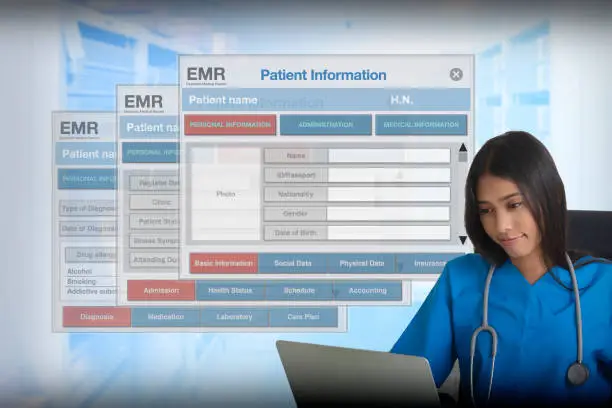
An online EMR system streamlines the process of updating patient medical records in real time. After completing an outpatient consultation, doctors can directly add new diagnoses and treatment records to the patient's electronic file. Nurses can also enter care updates into the same patient's medical record, eliminating the need to coordinate the printing and transfer of paper forms. Within minutes of the information being updated, all relevant medical team members can view the latest patient data. Compared to manually adding corrections to paper medical records that circulate between departments, electronic records are far more organized.
Key Points
Doctors can directly add new records to the electronic medical record.
Nurses can easily enter care updates.
New information is available to authorized staff.
Electronic medical records remain in a more organized state at all times.
The latest patient information can be quickly found.
Updated medical records better support the medical team in carrying out their work.
Chaos caused by outdated information is reduced.
Smoother update processes improve medical record management standards.
Conclusion
The core function of an online Electronic Medical Record (EMR) system is to help the entire medical team streamline the medical record retrieval process making it faster, more organized, and more convenient. Digital medical records come with functions to search, view, and update patient information in real time. As long as a doctor opens a centrally stored electronic file, they can compile the patient's complete medical history, consultation records, test reports, current medications, and personalized care plan, eliminating the need to separately request materials from the laboratory, pharmacy, and inpatient department. Nurses can also immediately access all information required to complete their care work, without spending large amounts of administrative time searching for paper files or coordinating the transfer of paper medical records between team members, avoiding delays to patient care caused by waiting for a single medical record. An online Electronic Medical Record (EMR) system also lays the foundation for information sharing and collaboration between medical teams, ensuring that all personnel can work with the latest patient data. Even during the busiest peak hours of outpatient clinics, fast file retrieval saves a great deal of valuable time. As long as appropriate security control measures are in place to protect sensitive data, digital medical records can even support remote, flexible work models.
Frequently Asked Questions
Can Doctors View Patient History?
Yes, authorized doctors can review patient history, previous notes, medications, and available medical information through the digital record.
Can Nurses Use Online EMR Systems?
Yes, as long as they obtain the corresponding permissions, nurses can retrieve the patient's care records, medical history, medication information, and other relevant files through the platform.
Can Online EMR Replace Paper Records?
An online EMR system can greatly reduce medical institutions' reliance on paper medical records, though specific medical record management specifications vary based on the institution's own policies and applicable regulatory requirements.
Does Online EMR Improve Team Collaboration?
Yes, authorized members of the medical team can all view the same shared digital medical record, making the transmission of relevant patient information and the coordination of care work more standardized and reliable.