EMR Medical Systems: How They Improve Healthcare Workflows
Electronic Medical Record (EMR) systems have completely transformed how medical institutions manage patient information, communicate between healthcare teams, and complete daily clinical tasks. Gone are the days when hospital consultation rooms, pharmacies, and billing offices relied on stacks of paper documents to circulate information. Even if a patient has just been transferred from another department, no dedicated staff are needed to deliver files; all information can be compiled with a single click into the system. As the digitalization of the healthcare industry continues to rise, EMR medical systems play a critical role in boosting efficiency, information accuracy, inter-team communication quality, and patient care standards.
What Are EMR Medical Systems?
An Electronic Medical Record (EMR) is a digital version of a patient's paper medical records, maintained by medical institutions or healthcare providers. The paper medical record booklet filled with a doctor's handwriting that patients used to carry when visiting the hospital, stored digitally in a hospital's system, is an EMR. It houses all types of core information, including medical history, diagnostic results, medication status, drug allergy history, lab results, vital signs, clinical notes, and treatment plans.
How EMR Medical Systems Improve Healthcare Workflows
Faster Access to Patient Information
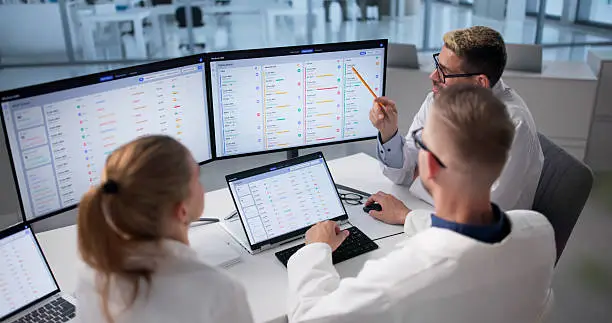
One of the biggest advantages of EMR systems is faster access to patient information. Healthcare staff no longer need to sift through stacks of paper files stored in filing cabinets nor wait for other departments to deliver paper records—all the time saved can be dedicated to treating patients.
Patient medical history
Past diagnostic results
Medication lists
Drug allergy history
Lab results
Imaging reports
Vital signs
Clinical notes
For example, EMR can support the following:
Electronically recording patient conditions
Managing appointments
Processing billing and coding
Issuing electronic prescriptions
Submitting lab test requests
Communicating with patients
Generating clinical reports
Managing referrals
By reducing repetitive paper-based work and eliminating the need to fill out the same information repeatedly, work efficiency is improved, allowing staff to dedicate more time to patient care.
Better Communication Between Healthcare Teams
Smooth communication is essential to delivering quality healthcare services. For any patient, their attending physician, ward nurse, responsible lab technician, and pharmacist, if any link in the chain miscommunicates information, it can delay the patient's treatment. EMR allows authorized members of the healthcare team to access the patient's relevant information online, with everyone viewing the same most up-to-date record, eliminating scenarios where one team member has information another does not. For example, an attending physician can view lab results, a nurse can update clinical notes, and all other authorized medical staff can view the patient's treatment plan. This shared access reduces communication gaps, enables more coordinated teamwork between team members, and ensures no changes in a patient's condition are overlooked.
Many EMR systems also issue alerts for the following scenarios:
Potential drug interactions
A patient's drug allergy history
Duplicate prescribed medications
Medication dosage issues
Past medication history
These automatically triggered system alerts help medical staff avoid many risks they might otherwise overlook, making the process of prescribing and managing medications far safer.
Clinical Decision Support
Many modern EMR systems come equipped with clinical decision support (CDS) tools, which act as an always-available professional assistant for doctors. These tools provide relevant information and alerts when medical staff are making medical judgments, ensuring no important precautions are missed.
Specific functions include:
Drug interaction alerts
Clinical task reminders
Preventive care alerts
Evidence-based treatment guidelines
Patient-specific customized alerts
Diagnostic support
Ordering templates for specific conditions
When these features are reasonably integrated into daily clinical work, they help medical staff make more reliable judgments and reduce unnecessary delays, ensuring patients' treatment is not held up by the need to research various materials.
Fewer Duplicate Tests
Medical staff can easily review a patient's prior lab work and diagnostic results to determine if a requested test has already been completed. In many cases, if a doctor does not see a patient's prior test reports, they may order the test again, leading to unnecessary expenses and discomfort for the patient, such as requiring a second blood draw or repeat imaging scan. This eliminates unnecessary repeat tests, saving time and resources, and sparing patients from undergoing unnecessary procedures—a win-win outcome for both hospitals and patients.
Improved Patient Record Accuracy
In emergency care scenarios, these issues can lead to catastrophic outcomes. Digital medical records provide a more structured method for recording patient information, eliminating these problems at their source.
EMR Workflow: From Patient Registration to Follow-Up Care
EMR systems connect multiple stages of a patient's care journey. From the first time a patient registers their personal information at a hospital to the doctor following up on their recovery after treatment, all information for the entire process can be found in the same system, eliminating the need to fill out forms at every department or submit materials at every window.
Benefits of EMR Systems for Patients
Beyond healthcare staff, patients also gain numerous benefits from EMR systems, resolving many of the common frustrations that come with visiting a hospital.
Changes patients can experience include:
Shorter wait times to see a doctor
More coordinated care from medical teams
No need to repeatedly fill out identical forms
Smoother medication pickup processes
Better organized personal medical records
Easier communication with doctors
Access to continuous, uninterrupted care
Fewer unnecessary repeat tests
When medical staff has access to accurate, useful information, they can make more appropriate treatment decisions for patients, eliminating unnecessary discomfort and wasted expenses.
Benefits of EMR Systems for Healthcare Staff
EMR also improves the daily work environment for all medical staff, including doctors, nurses, and administrative personnel. What used to require daily work with massive volumes of paper documents, running between locations to deliver materials and relay messages, can now be mostly handled by the system, reducing overall work pressure for all teams.
Core benefits include the following:
Easier access to Patient Information
Elimination of reliance on paper medical records
Better organized records
Faster information lookup
Smoother team communication
Automated administrative workflows
Better patient information tracking
Support for clinical decision-making
These improvements make the entire healthcare workflow more efficient, enabling the hospital to operate more smoothly and eliminating bottlenecks at every stage of care.
Challenges to Implementing EMR Systems
Although EMRs offer these many advantages, deploying and using the system in practice presents a number of difficulties. It is not as simple as purchasing software and installing it on a computer to begin use immediately; many practical issues must be resolved along the way.
Data Security
A patient's medical information is highly sensitive, and no one wants their private information, such as medical history or drug allergies, to be leaked without authorization. Medical institutions must implement reliable security measures to prevent unauthorized access to electronic medical records, avoid data breaches, and defend against all other types of cybersecurity risks to protect patients' privacy.
System Interoperability
Different medical systems must be able to transmit data smoothly, sharing authorized patient information whenever needed. If different systems cannot connect, information gaps will emerge. For example, if the EMR used by Hospital A cannot interface with the system used by Hospital B, patients must still carry paper medical records when transferring between facilities, preventing the full advantages of digital healthcare systems from being realized.
Best Practices for Successful EMR Implementation
Medical institutions can follow these proven methods to improve their EMR implementation success rate and avoid common pitfalls.
Provide comprehensive staff training.
Involve medical staff in the system planning process
Design workflows around actual clinical needs
Set realistic, practical requirements for information recording
Ensure patient data is accurate and complete
Use Clinical Decision Support tools appropriately
Establish robust cybersecurity protections
Monitor system operation status
Collect user feedback
Provide ongoing technical support
Future EMR

As more and more medical institutions adopt advanced digital tools, EMR technology continues to evolve and will not remain limited to its current feature set. Artificial intelligence, automation, predictive analytics, patient portals, remote monitoring, and improved system interoperability are all technologies that are increasingly shaping the digital healthcare industry and will make EMR systems far more capable. Future EMR systems will focus more on reducing the burden of administrative work, supporting doctors in making better clinical decisions, and delivering accurate information to medical staff promptly when needed, eliminating the need for doctors to spend hours filling out unnecessary forms.
Conclusion
EMR medical systems have become an indispensable part of modern healthcare. By digitizing patient medical records and connecting clinical and administrative workflows, they help medical institutions improve efficiency, communication quality, record standards, medication management capabilities, and patient care levels. The greatest advantage of EMR is its ability to deliver accurate information to authorized medical staff whenever it is needed. Although implementation requires addressing challenges such as costs, training requirements, cybersecurity, and workflow adaptation, careful planning and well-executed system design deliver significant benefits to medical institutions. As medical technology continues to advance, EMR systems are expected to integrate deeply with automation, artificial intelligence, data analytics, remote monitoring, and more digital health technologies.
Frequently Asked Questions
What Are EMR Medical Systems?
EMR (Electronic Medical Record) systems are digital versions of patients' paper medical records, storing information such as medical history, diagnostic results, medication status, allergy history, lab results, clinical notes, and treatment plans.
Can EMR Systems Save Time for Healthcare Staff?
Yes. EMR automates or simplifies repetitive tasks such as recording information, submitting orders, processing prescriptions, scheduling, generating reports, and accessing records, allowing medical staff to dedicate more time to patient care.
What Is the Difference Between EMR and EHR?
EMR generally refers to digital medical records used exclusively within a single medical institution. EHR has a broader scope, designed to support the secure transmission and use of health information across different care settings.